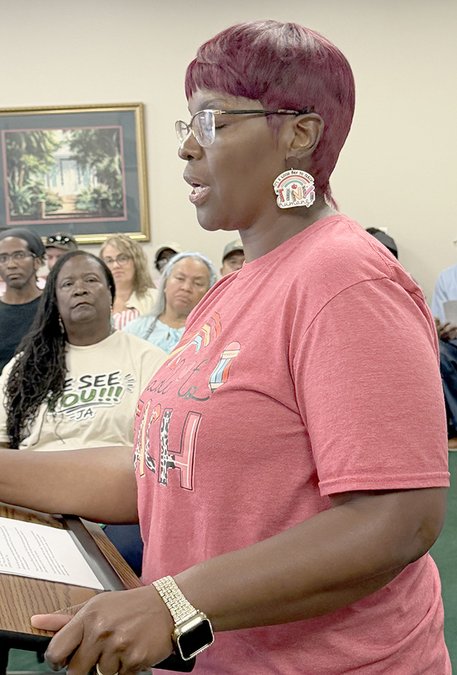
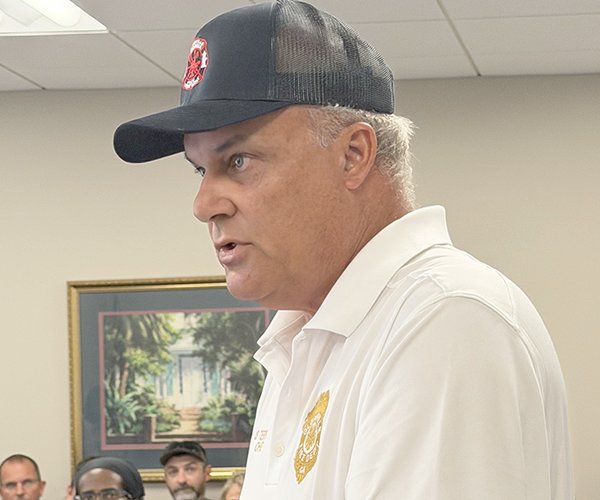
Tawanna Williams questioned the Glennville mayor and city council members at their meeting of August 4, 2026, on why the council has chosen to prohibit manufactured homes, one of the most affordable forms of home ownership available to many working families.
"Approximately 19.1 percent of city residents in Glennville live below the poverty level, a rate higher than the statewide average, and these represent hardworking people who are simply trying to afford a place to call home," said Tawanna.
"Manufactured homes have provided safe, affordable housing for countless Americans. They offer opportunities for young families buying their first home, seniors living on fixed incomes, veterans, and working individuals who simply cannot afford today's rising housing costs. Restricting them does not make housing more affordable; it makes it less accessible," she said.
Restricting them [manufactured homes] does not make housing more affordable; it makes it less accessible...Tawanna Williams to Glennville City Council
"Despite the way some people view mobile homes, my concern is whether our city's policies reflect fairness and equal opportunity for all of our residents," she said.
"My understanding is that concerns about two existing mobile home parks and the condition of some homes within those parks led to a six-month moratorium on placing manufactured homes within city limits. That moratorium was later extended another six months, and eventually, an ordinance was adopted that continued to prohibit new manufactured homes for residential purposes. If the issue was poorly maintained homes, then why weren't existing code enforcement tools used, and were property owners contacted and code violations issued," Williams asked.
"Were other remedies considered before placing a citywide restriction on an entire type of affordable housing," she questioned the council.
She also pointed out that it was difficult to understand that, after restricting manufactured homes for people who want to live in them, the council recently approved allowing manufactured homes to be placed within the city limits for sale purposes.
"That decision naturally raises questions from the public. If manufactured homes are considered appropriate enough to be displayed and sold within our city, why are they not considered appropriate for families to live in? If they are acceptable as a business, why are they unacceptable as a home?" she further stated, pointing out these inconsistencies.
In asking for a reconsideration on this ordinance, she commented that when the council's decisions appear inconsistent, it is only natural for people to ask questions and seek clarification.
"I respectfully ask this council to reverse the current ordinance and adopt reasonable standards that allow manufactured homes within appropriate areas of our city, just as surrounding cities have done. Affordable housing is not a threat to our community. For many families, it is their only path to home ownership," said Williams in closing.
No comments were made to her from the mayor and council in response to her request.
Another individual, Jo Ann Anderson, also made a presentation to the council prior to Williams' comments. Anderson has been given five minutes in previous meetings regarding the April 28 video. In this video, after a called council meeting, the mayor and three council members made derogatory remarks about city employees and local business owners. Anderson continues to speak to the council on the shaken confidence in their leadership and the betrayal of public trust. She pointed out that citizens continue to question their character and judgment as elected leaders of Glennville. She added that citizens have a path to remove city officials, which involves a petition. She emphasized to the mayor and council their elected position is not an entitlement, but that government belongs to the people and not those temporarily in the chairs in the City Hall meeting room.
Randy King also appeared before the council on an issue of sewage backing up at the church where he pastors. Abundant Life Apostolic Church is located at 735 W. Barnard St in Glennville. He related that the sewage issue was a problem in their old building, but several sewage backups have occurred in their new building.
"We have had this problem for 20 years, and when are you going to correct it? We need answers," King said. He said he had been told that it was the church's problem, but King said it is not their issue, but the city's.
Council member Cynthia Miller asked why Kicklighter Street was removed from the original agenda she received, and she was not aware of this until she attended the meeting. The original agenda item was for the discussion/approval of FY 2027 LMIG (Local Maintenance Improvement Grant) for the resurfacing of Frontage Road; installing sidewalks on Kicklighter Street; and replacing sections of sidewalk on MLK Drive, W. Mann Street, E. Barnard Street, and Hwy. 301. The City is receiving $100,908 from the state for these projects. Mayor Bernie Weaver replied that the City has until February to make a decision on these mentioned items.
Weaver stated the City is now live streaming the meetings, and archiving of the meetings will begin next month, which had been a request of DeAndreia Youngblood at several recent meetings.
Other approved items were as follows:
*Approval of signage at 103 E. Barnard Street, Arline Wiggins, Certified Public Accountant
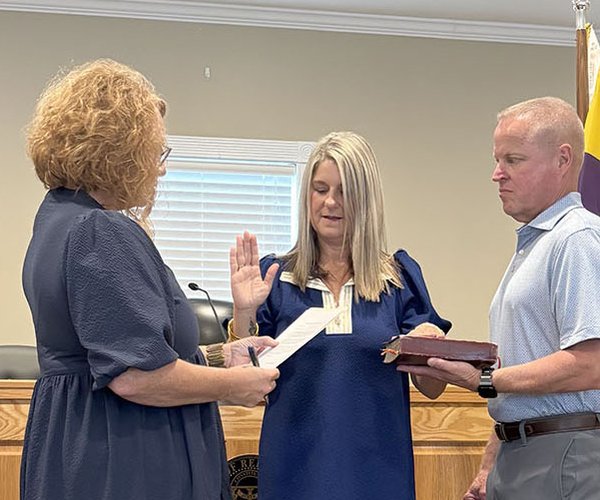
*Appointment of Tori Flowers to Ohoopee Regional Library Board to replace Marc Nobles, whose term has expired
*Event permit for a tent revival September 11-13, from 6:30 p.m. to 8 p.m., at Glenvue Health & Rehabilitation, 721 N. Veterans Blvd.
*Event permit for Celebration of the Christmas Season Lighted Parade, Friday, December 4, 6:30 p.m. to 7:30 p.m, beginning at the City Auditorium parking lot and ending on Mann Street.