By allowing ads to appear on this site, you support the local businesses who, in turn, support great journalism.
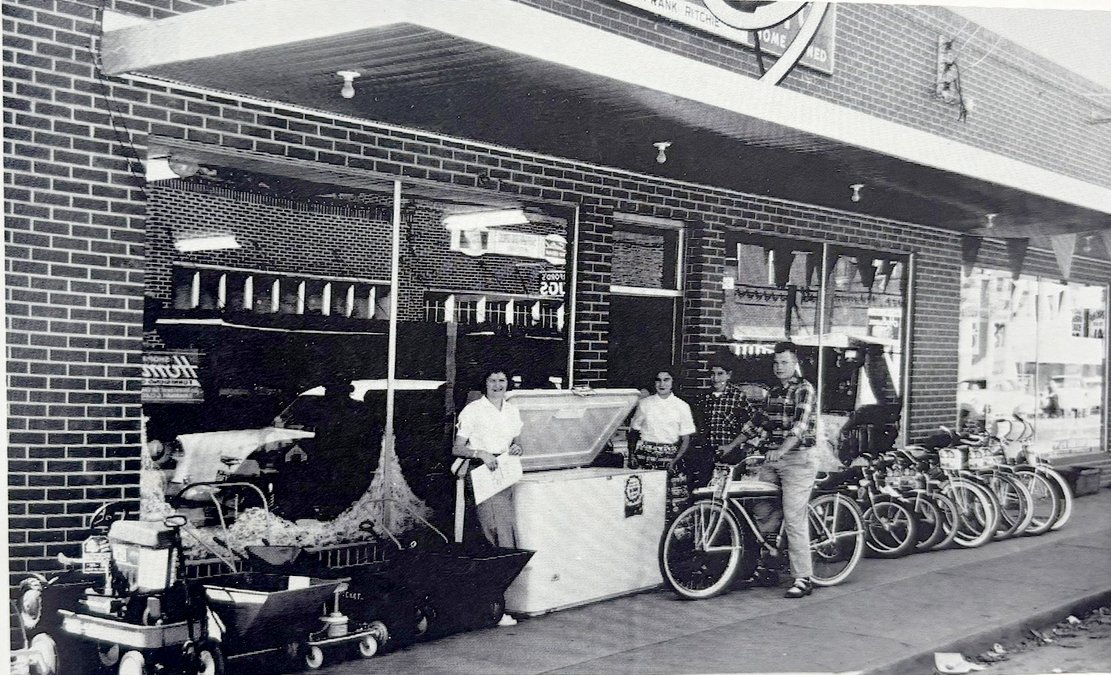
Saturday afternoon on Main Street
Main Street.jpeg
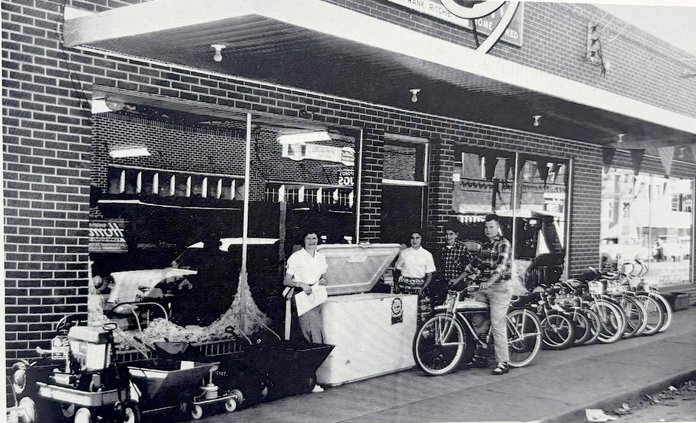
Western Auto

Within a few weeks, most of the visual evidence of the vibrant hustle and bustle of the business district on Main Street in Reidsville, Georgia, during the early to mid-20th century will be relegated to a few surviving, dogeared, black and white photos and fading memories of the rapidly declining numbers of individuals who witnessed those days and events. Time marches on relentlessly.

The organization of the business district in the western shadow of the Tattnall County Courthouse reflected the needs of a small rural community at the beginning of the 20th century. Like thousands of others across the nation, that tiny community would absorb and repel the destructive body blows of the Great War (WW I), a worldwide economic depression, a global struggle between the forces of democracy and fascism (WW II), the threat of nuclear annihilation (the Cuban Missile Crisis), and help stand firm against communist expansion in small and unfamiliar nations on the far side of our planet (Korea and Vietnam).

The written word and surviving photographs struggle to capture the personal and collective efforts of the thousands of small communities in which individuals worked daily to put sufficient food on the table while trying to develop a better future for themselves and their children. Reidsville, and all the small rural communities in Tattnall County, fit that mold. On Friday and Saturday afternoons, in particular, the local business districts were a necessary destination, and it was a time and place where one seldom met a stranger, or so it seemed.

On the southern most location on Main Street where current demolition is completed, the Western Auto Store was constructed in the early 1950s. Western Auto was a nation brand that became popular in the 1950s and ‘60s with a reputation for quality merchandise. Mr. Frank Ritchie and his wife, Ruth, owned and operated the store, and their son, Bob, worked on radio and television sets briefly in his teenage years. Like many adult males in that era, Mr. Ritchie could work on anything from jewelry (Mrs. Ritchie had a jewelry section inside the store) to bicycles. He sold Wizard tools, lawnmowers, and outboard motors, and VFW Post 7764 has a 22-inch lawnmower that dates back to the late 1960s that is in perfect running condition. My first shotgun was a Stevens 410 single barrel listed at $26.95, and Mr. Ritchie knocked off a few bucks when my father purchased it. I checked on it late on Christmas Eve, and the gun was still in the rack. He and my father conspired to surprise me on Christmas morning. Dad picked it up just before the store closed around 10 p.m. on Christmas Eve. My father had said it was too expensive, and he simply didn’t have any extra money. It was behind the tree on Christmas morning. My wife’s engagement ring came from the Western Auto jewelry store, and unfortunately, it was much more expensive than my shotgun. It required several payments. My son’s first bicycle was purchased there, and some youngster somewhere might still be riding it. We passed it on to a relative, and who knows where it went from there.

Mr. and Mrs. Ritchie moved to Reidsville in the late 1940s or early ‘50s, but Reidsville quickly became his adopted hometown. As a member of the Reidsville Lions Club, he had 50 years of perfect attendance.

Looking north on main Street, the Sims Store was next door to the Western Auto. Records indicate that the Sims Grocery Store was founded in 1929 by W.W. Sims under the brand name of Sims Service Stores, and it was the first network grocery store in Reidsville and a local forerunner of the developing trend of nationwide chain stores. Interestingly, it apparently retained some of the characteristics of local grocery stores in which products could be purchased on credit, and it served the community into the early 1950s. Credit terms were necessary, especially for farmers, who traditionally purchased all manner of needed items on credit throughout the winter and growing season and paid bills at harvest time.

Many future merchants in Reidsville spent formative years working in the Sims store. Terry Waters, who would become a well-known merchant in Glennville, learned the business as a young meat cutter trainee in the Sims Store in the mid-1950s. Ralph Stewart became the manager in 1959, and he would build and operate Stewart’s IGA, which was located in what was originally called the “Shopping Center” across North Main Street from the Courthouse in 1976. The Shopping Center, which was officially named Stewart’s IGA Plaza in 1981, included businesses like the Treasure Tree, Otasco (similar to Western Auto), Jarriel’s Pharmacy, and Bobby’s Phase II. The construction of a newer and larger store and its location indicated the increasing need for more parking space than was available in the old business district on Main Street south of the Courthouse. The IGA store continued to operate as a main source of groceries and meats until early 2000.

One other point of interest should be mentioned at this point. At least one competitive business was offering delivery services for groceries in the 1950s. Shuman’s Meat Market on South Main, directly across from the TOS Theater, had young boys on bicycles deliver phoned in orders from widow women, shut-ins, and elderly customers. Young men like Jimmy Shuman, Daniel Shuman, Buck Shuman, and Jackie Easterling knew every customer in town and delivered those grocery orders for a nickel or dime tip. Jackie Easterling once said he almost fainted when a nice lady gave him a quarter tip. Delivery service was an example of how small businesses adjusted to serve customers farther away from the business district.

The D.T. Phillips store was located between the Sims Store and the TOS Theater, and it was one of the first stores to recognize the need for a dry goods business that specialized in women’s clothing. Mrs. Louella Phillips had the skills of an entrepreneur and the charming personality that attracted women of all ages. Bobby Collins, who would become one of the best-known businessmen in the 20th Century in Reidsville, was tutored by Mrs. Phillips. I distinctly remember buying my first pair of penny loafers in the Phillips’ store, and Bobby was the salesperson. It seemed like every pretty girl in town was there. I wore those loafers so much that Mr. Ralph Curry, the shoe repairman on Church Street, had to re-sole them the following year. I think those shoes probably cost less than five dollars. Those were the days of penny loafers and ‘Bobbie Sox’ which were white socks neatly folded down to a specified height above the ankles of the teenage girls who wore them with blue jeans and other attire. Elvis fans and Bobbie Sox were very nearly one and the same.

As Mrs. Phillips stepped away from the business in the mid-1960s, Bobby took over and expanded. Along with his daughter, Carmen, they carried on a vital business that served the community for over 60 years. Eventually, they would expand into other areas, including Collins Mobile Homes, Collins Well Drilling, and more. As in other cases, the movement to the Stewart’s IGA Plaza in the mid-1970s as Bobby’s Phase II followed the trend of economic growth away from the original business district in Reidsville as traffic on Main Street increased and limited parking space and store size slowed economic growth. It is likely that some of the same economic trends changed the face of small towns throughout Georgia and the South.

References: The Tattnall County Heritage Book, The Tattnall Journal, and conversation with John P. Rabun, Jr.

Next week: The business district on West Brazell.